
What is A2M joint therapy and how can it help?
A2M (Alpha-2-Macroglobulin) is a naturally occurring protein in the blood that acts as a broad-spectrum protease inhibitor. It plays a crucial role in protecting joints by trapping and neutralizing enzymes (proteases) that break down cartilage, such as matrix metalloproteinases (MMPs) and cytokines like TNF-α and IL-1β, which contribute to osteoarthritis (OA) and chronic joint degeneration. A2M joint therapy is a marvel!
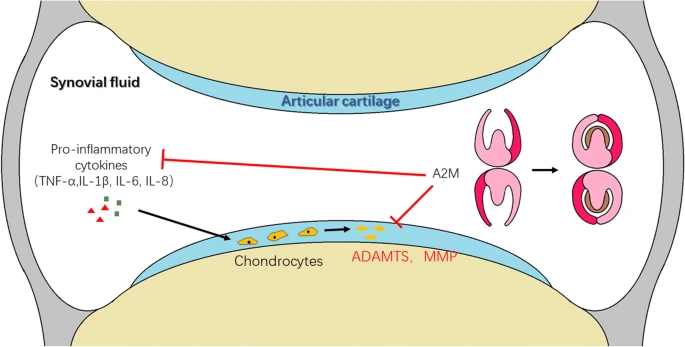
Provided by the Springer Nature Shared It content-sharing initiative
How A2M Works in Regenerative Medicine:
-
Inhibits Cartilage Breakdown – A2M binds to and neutralizes catabolic enzymes that degrade cartilage.
-
Reduces Inflammation – By blocking inflammatory cytokines, it helps slow down the degenerative process in joints.
-
Promotes Tissue Healing – It creates an environment conducive to cartilage repair and regeneration.
A2M Therapy for Osteoarthritis & Joint Pain:
-
Process: A patient’s blood is drawn, processed using a centrifuge and filtration system to concentrate A2M, and then injected into the affected joint.
-
Target Patients: Those with early-to-moderate osteoarthritis, chronic joint pain, or cartilage degradation.
-
Benefits: Provides a natural, regenerative alternative to corticosteroids or NSAIDs without harmful side effects.
Conditions treated effectively with A2M
-
Knee Osteoarthritis
-
Hip Osteoarthritis
-
Shoulder Osteoarthritis
-
Facet Joint Syndrome (Spinal Osteoarthritis)
-
Cartilage Degradation and Loss
-
Chronic Joint Pain (Non-Surgical Candidates)
-
Meniscus Injuries (Degenerative or Traumatic)
-
Tendon Inflammation (e.g., Chronic Tendonitis)
-
Joint Instability from Degenerative Conditions
-
Post-Traumatic Joint Degeneration
Contraindications of A2M Therapy
While A2M (Alpha-2-Macroglobulin) therapy is considered safe and well-tolerated for most patients, there are a few contraindications and precautions to be aware of:
-
Active infection at the injection site – Introducing A2M into an area with infection can worsen symptoms or spread bacteria.
-
Severe joint degeneration (end-stage osteoarthritis) – In cases where cartilage is completely worn away (“bone-on-bone”), A2M may offer limited benefit.
-
Bleeding disorders or anticoagulant use – Since the therapy involves a blood draw and injection, patients with clotting issues or on blood thinners should consult with their provider.
-
Autoimmune or blood-related conditions – A2M is derived from the patient’s own blood, but those with certain autoimmune diseases or blood disorders may not be ideal candidates.
-
Pregnancy or breastfeeding – There’s limited safety data for these populations, so treatment is generally avoided as a precaution.
Always consult a qualified provider to determine if A2M therapy is appropriate based on your individual health profile and medical history.
🧬 Scientific Insight: How A2M May Help Joint Health
A peer-reviewed study published in Osteoarthritis and Cartilage highlights Alpha-2-Macroglobulin (A2M) as a powerful natural inhibitor of cartilage-degrading enzymes. Researchers found that A2M may help protect joint cartilage by neutralizing proteins that contribute to osteoarthritis progression. This suggests A2M could play a valuable role in supporting joint health and slowing degenerative changes in conditions like knee osteoarthritis.